You Won’t Believe What I Learned Dining in Cali, Colombia
Dining in Cali, Colombia, isn’t just about food—it’s a full sensory journey. I went expecting bold flavors and lively street eats, but what I found were surprises I never saw coming. From hidden fondas to tourist traps with sky-high prices, my taste buds got schooled. This city delivers authentic moments, but only if you know where to look—and what to avoid. Let me take you through the real dining scene, one plate at a time. Cali pulses with rhythm, heat, and an unmistakable aroma of slow-grilled meats and frying plantains. It’s a place where every meal feels like a celebration, yet not every bite tells the truth. What I discovered wasn’t just about taste, but about trust, timing, and the quiet wisdom of eating like a local.
First Bite: My Arrival and First Impressions of Cali’s Food Scene
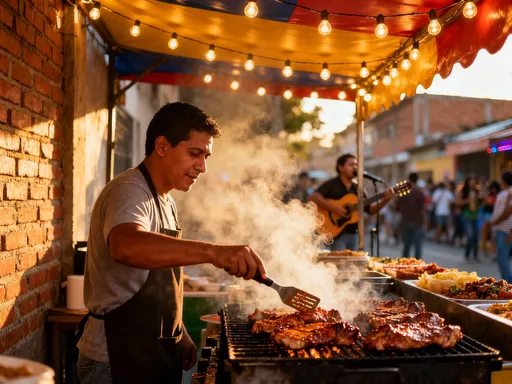
Stepping off the plane in Cali, the first thing that hits you is the warmth—not just from the tropical air, but from the energy of the city. The streets hum with salsa music, and the scent of cumin, garlic, and charred meat drifts from open-air grills. My stomach growled before my suitcase was even claimed. Eager to dive in, I followed the crowd to a bustling corner stall near Parque Bolívar, where locals stood three deep, laughing and clinking bottles of Colombiana soda. The menu was simple: grilled chicken over rice, fried yuca, and a slice of avocado. It looked authentic, smelled incredible, and came with a side of live percussion from a nearby street band.
But the first bite told a different story. The chicken was dry, overcooked on the outside and unevenly seasoned. The rice tasted reheated, and the avocado, though fresh, couldn’t rescue the dish. I paid less than five dollars, so expectations were modest, but I had expected more soul. What struck me most wasn’t the food itself, but the atmosphere—how the joy of the moment overshadowed the meal. People weren’t there just to eat; they were there to connect, to dance between bites, to be part of the rhythm. I realized then that in Cali, dining is as much about the experience as it is about the plate.
This duality became a theme throughout my stay. The city’s culinary reputation is built on passion, music, and flavor, but not every place that looks the part delivers. I learned quickly that popularity doesn’t always equal quality. The most crowded spots aren’t necessarily the best—sometimes, they thrive on convenience, location, or clever marketing. The real test wasn’t just finding good food, but understanding what made a meal authentic. Was it the recipe? The cook’s hands? The neighborhood? I began to see that to eat well in Cali, I had to look beyond the surface and listen more closely to the city’s quieter voices.
The Tourist Trap Trap: When Popularity Hurts the Plate
It didn’t take long to spot the pattern. Near major landmarks like the Iglesia de San Francisco and the Cali Tower, restaurants with flashy signs, English menus, and outdoor seating filled with foreigners began to stand out—not for their food, but for their prices. One place near Plaza Caicedo advertised “Traditional Colombian Feast” for $18 USD. That’s more than triple what a local would pay for the same dish in a neighborhood eatery. Curious, I ordered the bandéj (a regional rice and meat dish) and was handed a plate that looked more like a food-court version of Colombian cuisine—over-sauced, under-seasoned, and clearly made in bulk.
The difference wasn’t just in taste, but in intent. These restaurants aren’t designed to feed locals; they’re built to capture tourists who don’t know better. Their menus often feature “Colombian classics” with vague descriptions, allowing chefs to cut corners. Portions might be larger, but freshness is sacrificed. I noticed that many of these spots had high online ratings, yet the reviews were suspiciously generic: “Great food!” “Loved the atmosphere!” “So authentic!” But few mentioned specific dishes, cooking methods, or ingredients. A quick search revealed that some had been flagged for review manipulation, with multiple accounts posting identical phrases.
One evening, I compared two nearly identical menus—one in the tourist zone, one in a residential area. Both offered chuleta valluna (a grilled pork chop with sides). The downtown version cost $16 and came with a small, pre-cut avocado and limp fries. The local version, in Ciudad Jardín, cost $6 and included a whole avocado, fresh patacones, a scoop of handmade hogao sauce, and a side of sweet plantains still sizzling from the pan. The pork chop was thicker, juicier, and clearly marinated overnight. The lesson was clear: location dictates not just price, but quality. When a restaurant doesn’t rely on repeat customers, there’s less incentive to get it right.
Still, I didn’t blame the tourists. Without guidance, it’s easy to fall into the trap. The signs are welcoming, the staff speak English, and the tables are clean. But comfort can be costly. I began to see that eating well in Cali required a willingness to wander, to trust the unmarked doors, the handwritten chalkboards, the places where no menus were laminated. Authenticity, I realized, rarely comes with a Wi-Fi password.
Sabor de Barrio: Discovering Real Flavors in Local Neighborhoods
My turning point came when I stopped asking, “Where should I eat?” and started asking, “Where do you eat?” The difference was transformative. Hotel staff, taxi drivers, even a woman selling fruit on the corner pointed me not to the guidebook favorites, but to their own neighborhoods. “Go to Limonar,” said a nurse I met at a pharmacy. “There’s a little place on Calle 8 with the best sancocho in the city. No sign, just red tables.” I followed her directions and found myself in a narrow alley, where the smell of simmering beef, cassava, and cilantro pulled me toward a small, open-air kitchen.
The sancocho was served in a deep bowl, steaming and golden, layered with chunks of meat, yuca, corn, and plantain. It was rich without being heavy, seasoned with care, and clearly made that morning. The woman behind the counter, Doña Marta, had been cooking it for 32 years. “My customers are my neighbors,” she said. “If the food isn’t good, they won’t come back.” That simple truth became my compass. In Ciudad Victoria, I found a fonda where the abdomen (a slow-cooked beef dish) fell apart at the touch of a fork, infused with cumin, garlic, and a hint of orange peel. The chuleta valluna in Alameda came with a fried egg on top, its yolk running into the rice like liquid gold.
What stood out wasn’t just the food, but the setting. These places had no decor to speak of—concrete floors, plastic chairs, ceiling fans spinning slowly overhead. But they were full. Families shared tables, friends toasted with aguapanela, and grandmothers brought Tupperware to take leftovers home. There was no performance, no attempt to impress. The food spoke for itself. I began to understand that in Cali, authenticity isn’t a marketing term—it’s a standard of daily life. When a dish is made for people who will taste it tomorrow, it has to be good today.
These neighborhood gems also introduced me to flavors I hadn’t known existed. In Cali, food is regional, personal, and often passed down through generations. The use of local ingredients—like costeño cheese, fresh chontaduro, and homemade achiote oil—adds depth that mass-produced versions can’t replicate. I learned to look for the signs of care: the way the rice was stirred, the crispness of the patacones, the balance of salt and acid in the sauces. Eating in the barrios didn’t just satisfy my hunger; it connected me to the heartbeat of the city.
Street Food Smarts: What to Try and What to Skip
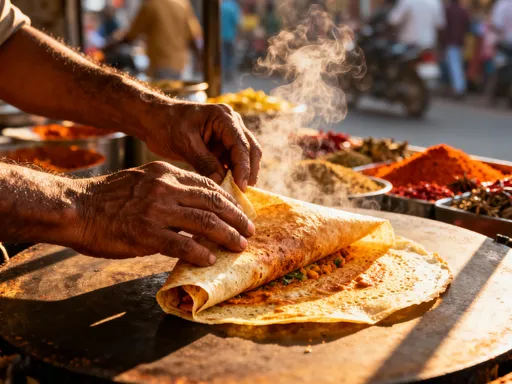
Street food is the soul of Cali’s dining culture, but not every cart is created equal. The best vendors are easy to spot—they have lines, turnover, and a rhythm to their work. I quickly learned that the busiest stalls are usually the safest and tastiest. High volume means fresh ingredients, constant cooking, and hygiene born of necessity. The arepa boy on Avenida Colombia, for example, grills corn cakes to order, splits them open, and stuffs them with melted queso campesino and a spoonful of hogao. He serves 50 an hour, and every one is hot, crisp, and satisfying.
But there are red flags to watch for. Carts with flies, dirty hands, or food sitting out in the sun should be avoided. I once saw a vendor reuse oil that had turned black, frying empanadas until they were more carbon than corn. Another served drinks with ice made from an unmarked barrel—a potential risk for waterborne illness. The rule I adopted: if the place doesn’t attract locals, neither should I. I also paid attention to timing. The best street food is eaten during peak hours—lunchtime (12–2 PM) and early evening (6–8 PM)—when everything is fresh and turnover is high.
Among the must-tries are grilled corn on the cob slathered with butter, cheese, and a sprinkle of chili; chuzos (skewers of marinated beef or chicken); and empanadas de pipián, made with a sweet plantain dough. I developed a favorite routine: grab an arepa in the morning, a patacón with cheese for midday, and a chuzo after dancing salsa. But I also learned what to skip. Overpriced fruit cups with mystery syrups, pre-cut mangoes in questionable water, and anything served lukewarm were easy to avoid. The key was respect—for the food, the vendor, and my own well-being.
Trusted vendors often become regulars’ territory. I noticed that the same people returned to the same carts every day, exchanging jokes, paying without counting change. That loyalty is earned, not assumed. By the end of my trip, I had my own spots—a woman who made arepas de huevo with a perfect crispy shell, a man who grilled chuletas on a small charcoal grill outside his home. These weren’t on any map, but they were the heart of my culinary journey.
Menu Mysteries: Hidden Costs, Misleading Descriptions, and Language Gaps
Even in modest restaurants, the menu can be a minefield. I learned this the hard way at a small sit-down place in Granada, where I ordered what I thought was a grilled fish dish. What arrived was a breaded, deep-fried fillet swimming in tartar sauce—not at all what I wanted. The Spanish word “asado”, I later discovered, can mean “grilled” in some regions but “fried” in others. Without clarification, assumptions can lead to disappointment. Other terms like “con todo” (with everything) or “a la criolla” (in the local style) are vague and vary by cook.
Then there are the hidden costs. Some restaurants add a 10 percent “service charge” automatically, even if not stated. Drinks, especially bottled water or soda, can cost double what they do at a store. I once paid $3 for a bottle of water at a restaurant where the same brand sold for $1.20 at the corner shop. Sides are often assumed—rice, beans, plantains—and added to the bill without asking. For budget-conscious travelers, these extras add up quickly.
For non-Spanish speakers, the challenge is real. While some staff speak English, many don’t, and translation apps can miss nuance. I started carrying a small phrasebook and learned key questions: “¿Está incluido el servicio?” (Is service included?), “¿Se puede cocinar a la parrilla?” (Can it be grilled?), “¿El agua es de botella?” (Is the water bottled?). Politeness goes a long way. A simple “Con permiso” before asking, a smile, a thank you—these small gestures open doors.
I also noticed that some places assume foreigners will pay more. Prices aren’t always posted, and the bill might mysteriously inflate. The best defense is awareness. I began checking prices at multiple places, asking locals for benchmarks, and paying in cash to avoid card surcharges. When in doubt, I chose spots where locals dined. If everyone around me was paying the same, I knew I wasn’t being singled out. Transparency, I learned, is often found in community.
The Late-Night Dilemma: Eating After the Music Starts
Cali is a city that dances late, and by 10 PM, the hunger sets in. But the options narrow quickly. Many restaurants close by 9, leaving only street vendors and 24-hour grills. The late-night staples are fun—patacones (twice-fried plantains), chuzos, and arepas—but after three nights, the menu starts to feel repetitive. I missed fresh salads, steamed vegetables, or even a simple grilled fish. The reality is that Cali’s nightlife isn’t built around healthy eating. It’s built around energy, flavor, and indulgence.
One night, after salsa lessons in Juanchito, I found myself craving something light. Most places offered only fried food. I finally found a small fonda still open, run by an elderly couple. They warmed up leftover sancocho and added a fresh avocado. It wasn’t fancy, but it was nourishing. Another time, I discovered a bakery in San Fernando that stayed open until midnight, selling empanadas de espinaca and fruit-filled pastries. These hidden gems exist, but they require planning.
My strategy evolved: I started eating a hearty dinner before going out, or packing snacks like bananas, nuts, or granola bars. I also learned to identify which neighborhoods had late-night options. Juanchito and Granada have more street food, while residential areas go quiet. Some hostels and hotels offer simple kitchens, a valuable resource for travelers wanting control over their meals. I even met a group of locals who hosted midnight asados (barbecues) in their backyards—an invitation-only scene, but one that showed how food continues to connect people, even in the small hours.
The lesson wasn’t to avoid late nights, but to prepare for them. Eating well in Cali doesn’t stop at sunset. It just requires a different kind of awareness—a willingness to adapt, to explore, and to accept that sometimes, the best meal at 1 AM is a warm arepa with cheese, shared with friends under a streetlight.
Lessons on the Plate: How My Dining Mistakes Made Me a Smarter Traveler
Looking back, my missteps were the most valuable part of the journey. The overpriced meal, the underwhelming chuleta, the fried fish I didn’t order—each mistake taught me something. I learned to question popularity, to seek out local rhythms, and to trust my instincts. I stopped relying on apps and started relying on people. I discovered that the best meals often come with no signage, no Wi-Fi, and no English menu. They come with a smile, a story, and a sense that I was exactly where I was meant to be.
Food became my gateway to culture. In Cali, every dish carries history—the African roots of sancocho, the Spanish influence in the use of garlic and olive oil, the Indigenous legacy in corn and plantains. To eat here is to taste the layers of a rich, resilient identity. My dining experiences deepened my respect for the city, not just as a tourist destination, but as a living, breathing community.
The discomfort of getting it wrong—ordering the wrong thing, paying too much, feeling out of place—was part of the process. It reminded me that travel isn’t about perfection. It’s about presence. It’s about showing up, listening, and being willing to learn. Every meal, good or bad, added to my understanding. And in the end, I didn’t just eat in Cali—I connected with it.
Dining well here isn’t about finding the “best” restaurant. It’s about respecting the culture, supporting local cooks, and staying curious. It’s about knowing when to follow the crowd and when to step off the path. With a little awareness, a little humility, and a lot of appetite, every meal can be a revelation.
True dining in Cali goes beyond flavor—it’s about context, culture, and caution. The city rewards the curious but punishes the passive. By avoiding common pitfalls and embracing local rhythms, travelers can transform meals into meaningful moments. This isn’t just about eating well; it’s about traveling wiser.